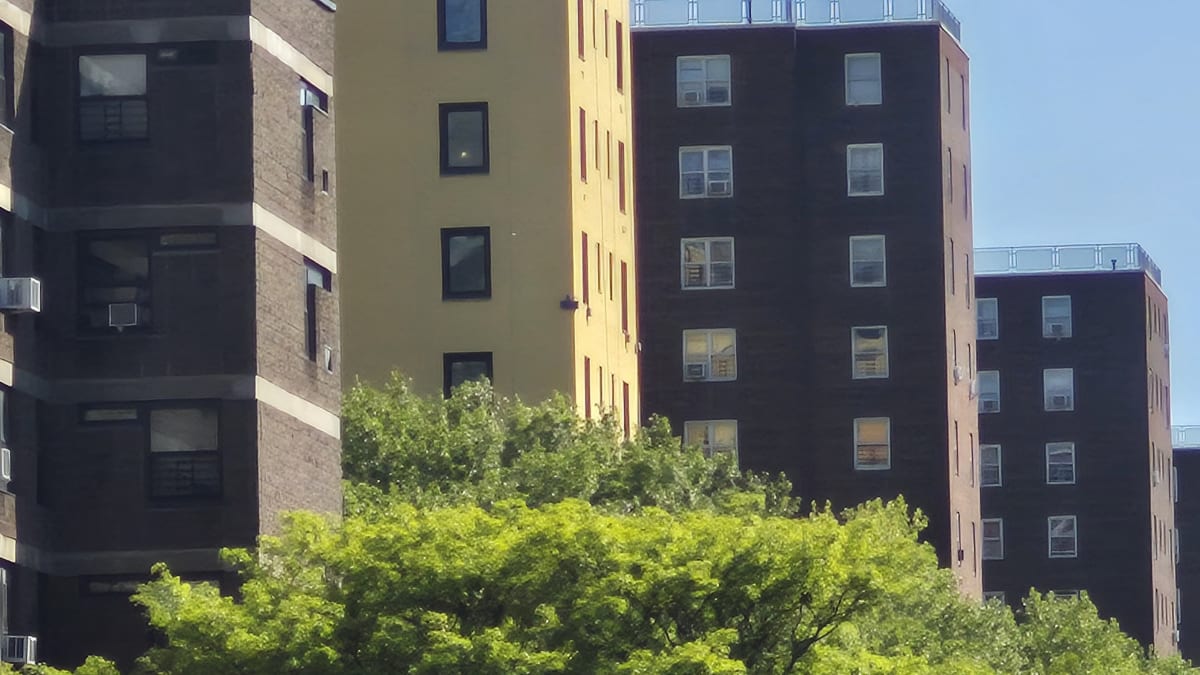
Roughly 70,000 New Yorkers applied through the housing lottery for 281 affordable apartments in a single Inwood building. Seven months after the building opened, only 168 of those apartments had tenants in them. The other 113 units sat empty in a city with a 1.4 percent rental vacancy rate — the lowest since 1968.
The Inwood case is not unusual. According to a report released in April by Enterprise Community Partners, a nonprofit that helps build and finance affordable housing, newly built affordable apartments in New York City regularly remain empty for more than a year after construction completes. One Bronx affordable building for seniors took two years to lease up. In that time, eighty-eight people who originally applied for those apartments either withdrew their applications, moved into nursing homes, or died.
The numbers describe a paradox that has become a defining feature of NYC housing policy: the city has a severe shortage of affordable apartments and, at the same time, thousands of finished affordable apartments sitting vacant.
Where the time goes
The bottleneck is not construction. The bottleneck is what happens between the certificate of occupancy and the moment a tenant gets the keys.
Most affordable apartments in New York City are filled through Housing Connect, the city's centralized lottery system. An applicant submits a single application, the system pulls eligible candidates by income tier, and a sequence of bureaucratic verifications begins. Income documentation. Employment verification. Asset checks. Background reviews. Voucher coordination, when applicable. Each step happens at a different agency or office, with different processing times, and any one of them can stall the application for weeks or months.
For the mechanics of how applications and log numbers work, see how to apply to the Housing Connect lottery.
Industry data cited in the Enterprise report shows that initial application processing now takes a minimum of four months for tenants whose income includes a housing voucher — and nearly all applicants referred from the homeless services system have one. Building-level processing data from one large affordable housing manager showed average lease-up timelines for whole buildings ranging from twelve to twenty-four months. Outside New York, comparable affordable buildings in other cities lease up in three to six months.
Alicia Glen, who served as deputy mayor for housing under the de Blasio administration, wrote in March that the central difference is structural: "These cities do not rely on a centralized lottery system. Everywhere else, developers largely manage their own affordable leasing." New York's Housing Connect was designed to ensure equitable access. The cost of that design choice is processing time.
What is happening to applicants
The numbers from the Inwood building tell one piece of the story. Seventy thousand applicants for 281 units is a 250-to-1 ratio. The mathematical reality is that most applicants will not get a unit, regardless of processing speed. But for the applicants who are selected, the gap between selection and move-in is its own crisis.
A household selected for a unit in October may not be cleared to sign a lease until the following May or later. During those months, the household's life continues. Income changes. Family composition changes. Some applicants enter the lottery from shelter, where they have a referral but no stable address; others are paying market rent in an apartment they cannot sustain. The verification timeline does not pause for these realities.
Christina Harsch, a leasing director at Wavecrest Management quoted in coverage of the Enterprise report, said: "I can't get anyone in faster than four months. As a marketing agent, that's deeply frustrating. And as a citizen, it's disheartening."
For the building owner, an empty unit is also a financial event. Most affordable buildings carry debt service that does not pause for vacancy. Empty units in a newly delivered building can mean missed loan covenants, strained operating budgets, and pressure on the long-term financial viability of the building itself — which is, ultimately, pressure on the unit's continued affordability.
What the city is doing
Mayor Zohran Mamdani convened the Streamlining Procedures to Expedite Equitable Development (SPEED) Task Force on the day he took office, with explicit instructions to identify ways to accelerate housing approvals and lease-up timelines. The task force was originally scheduled to issue recommendations by April 11. City Hall has indicated the report will arrive in the coming weeks.
The Department of Housing Preservation and Development has separately signaled that the lottery and homeless-placement systems are due for an overhaul. HPD Commissioner Dina Levy told the City Council in March: "We plan to revamp both our housing lottery and our homeless placement systems. Incremental fixes here will not go far enough. We're taking a hard look at every part of the process and if necessary, we will migrate to a more efficient and nimble system."
Whether either reform will arrive in time to affect the buildings currently leasing up is unclear. Reforms of this kind, in NYC, typically take months to design and longer to implement. The 113 empty apartments in the Inwood building, and the eighty-eight applicants who waited two years for the Bronx senior building, were operating under the existing system.
What an applicant can do
For New Yorkers in the lottery now, three concrete things are worth knowing.
Confirm what stage your application is in, in writing. Housing Connect provides applicants with a status indicator, but the meaningful information is which specific verification step is currently outstanding and which agency is responsible for it. If your application has been waiting on income verification for three months, that is a different problem than waiting on a voucher transfer for three months, and the people to follow up with are different.
Keep your supporting documentation current. Income documents from a year ago will be requested again if the verification stalls. Pay stubs older than three months are typically not accepted. Maintaining a current folder of documents — pay stubs, bank statements, voucher paperwork — at all times reduces the risk of a re-verification cycle adding months to your timeline.
Document the building you have been selected for, before move-in. Once an applicant is selected for a specific unit, the building is identifiable. The unit's prior history, the building's open violation record, and the owner's broader portfolio are all matters of public record. The applicant has the same right to that information as any market-rate renter. Knowing the condition of the building you are about to wait six months to enter is not a luxury — it is the same due diligence anyone would perform before signing.
The wider point
The vacancy paradox is a structural problem with no quick fix, and structural problems in NYC housing tend to outlast individual administrations. Whatever the SPEED Task Force recommends, whatever HPD's lottery overhaul produces, the existing pipeline of buildings now leasing up will continue to lease up under the existing rules.
For an applicant, the practical implication is that affordable housing access is not just a question of being selected. It is a question of surviving the gap between selection and move-in, with the documents in order, the building checked, and the time-cost factored in. The 70,000 applicants who applied for the Inwood building did the easy part. The 168 who actually moved in did the hard part.
Sources: Enterprise Community Partners, "Vacancy in Affordable Housing" report (April 2026); THE CITY, "In NYC's Brutal Housing Crunch, Finished Affordable Units Often Sit Empty for Months" (April 10, 2026); Alicia Glen op-ed in NY Daily News (March 2026); HPD Commissioner Dina Levy testimony before NYC Council (March 2026); Mayor's Office on SPEED Task Force.