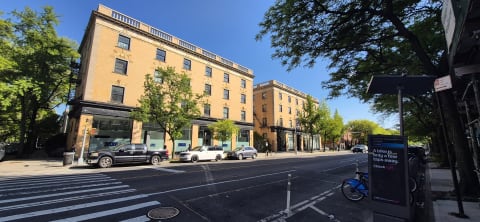
In the past two years, NYC developers have filed permits for more than 150 residential buildings with one thing in common: each has exactly 99 apartments.
Not 100. Not 110. Ninety-nine.
The number is not coincidence. Under the 485-x tax abatement program — the state's incentive for new residential construction — buildings with 100 or more units must pay construction workers a higher minimum wage. Buildings with 99 units do not.
The math, for a developer choosing between a 100-unit building and a 99-unit building on the same lot, is straightforward. One unit's worth of revenue is meaningfully less than the labor cost increase that 100th unit would trigger. So the building gets built at 99.
THE CITY first reported the pattern this week. The implications for what actually gets built in New York are larger than they look.
What the trick costs the housing supply
A developer planning a 200-unit building on a large parcel has two options under the current rules.
Build 200 units in one structure: triggers the higher wage requirement, increases costs, narrows margins.
Build two 99-unit buildings on the same parcel: avoids the wage requirement entirely. Fewer total units (198 instead of 200), but lower costs per unit, and the developer keeps more of the abatement.
For larger projects, the gap widens further. A 300-unit project becomes three 99-unit buildings — 297 total. A 500-unit project becomes five — 495 total.
Each of these clustered builds shares walls, mechanical systems, and lobbies that look, to a passing observer, like a single building. Architecturally, they are. Legally, they are not.
Some developers are also "goosing the unit count down by combining units," in the words of John Woelfling, a partner at Dattner Architects quoted by THE CITY. A planned building approaches 99 units from above? Combine two studios into a one-bedroom. Combine two one-bedrooms into a two-bedroom. The unit count drops; the square footage stays the same; the wage trigger never activates.
The result is the same number of square feet of housing, in fewer apartments, in a city that needs more apartments.
Why the threshold exists at all
The 485-x tax break replaced 421-a, the long-running incentive that lapsed in 2022. The new program was designed to address a specific objection to the old one: that developers were taking generous tax breaks while paying construction workers below-prevailing wages.
So the program built in tiers. Smaller buildings (under 100 units) keep simpler labor requirements. Larger buildings trigger higher wage floors and stronger labor protections.
The intent was to channel meaningful labor standards into the largest projects, where the dollar amounts justified the cost.
The unintended consequence is that 99 has become a magic number. Developers who would naturally build at 110 or 130 units are scaling down. Developers who would naturally build at 250 are splitting the project into multiples of 99.
Labor groups argue this is exactly the kind of gaming the program was designed to prevent. Industry groups argue the threshold is the binding constraint, not the program itself — that building larger remains uneconomic at the wage floor regardless of intent.
Both arguments are partly right. The data is the only fact that holds either side accountable.
What this means for renters
For a New Yorker looking for an apartment this year, the 99-unit pattern produces several effects worth noticing.
The supply that gets built skews toward fewer, larger units. Combining two studios into a one-bedroom shrinks total unit count without shrinking total square footage. Studio inventory in particular is being held back by the threshold.
The buildings that get built look different on the ground than on the listing. Three 99-unit buildings clustered as a single project share lobbies, gyms, and roof decks but are legally separate structures. Lease terms, building staff, and management can vary across the cluster — even though tenants experience the buildings as one.
The neighborhoods affected are not random. The 99-unit pattern shows up most where the abatement makes the largest difference: outer-borough neighborhoods being newly developed, edges of rezoning corridors, and lots large enough to support multiple structures. Crown Heights / Prospect Heights borders, parts of Long Island City, sections of the Bronx, and stretches of Brooklyn near transit are seeing the heaviest concentration.
The unit you tour may be in a different "building" than the one next to it. This sounds like a paperwork detail. It can matter for tenant rights. Rent stabilization rules, landlord obligations, and tenant association membership are all building-specific.
What an applicant or tenant can check
If you are looking at a new development, three questions surface the structure:
How many units does the building actually have? Listings often describe a "240-unit luxury development." That may mean one building with 240 units, or it may mean three 99-unit buildings (297) marketed as a single project. The legal structure is on the certificate of occupancy and the building's filings with the Department of Buildings.
Which BIN — building identification number — does your unit fall under? Each legally separate building has its own BIN. If a development markets multiple BINs as one project, the public-record profile of your unit is the profile of your BIN, not the project's combined record.
Was the development built under 485-x? Buildings receiving the tax abatement are listed in the Department of Finance database. Knowing whether your building benefits from the abatement matters for understanding the regulatory framework your unit was built under — including any affordability set-asides that come with the program.
The longer arc
The 99-unit pattern is two years old. The buildings being filed today will deliver in 2027 and 2028. Whatever the city decides about the threshold — fix it, raise it, eliminate it — the pipeline already in motion will continue to deliver.
For New Yorkers who watch the cranes go up, the takeaway is structural rather than urgent. Each cluster of 99-unit buildings on a single lot represents a choice about what NYC builds and at what scale. The choice is not made by accident, and it is not invisible. It is sitting in permit filings, in floor plans, in the math that determines whether a 100th unit gets drawn into a project or quietly subtracted out.
The shortage in NYC is real. The patterns shaping how we respond to it are real too — even when they hide behind a single number.
Sources: THE CITY, "99-Apartment Building Boom Makes 99 Problems for NYC Housing Crisis" (May 7, 2026); NYC Department of Buildings permit filings (per THE CITY analysis); New York State 485-x tax abatement program guidelines; Dattner Architects, REBNY, and union commentary as quoted in THE CITY reporting.