
What the IBO Found in NYC's Rent Stabilized Stock
The nonpartisan IBO released two reports on the condition of NYC’s ~1M rent-stabilized apartments. What they found, just before the RGB vote.

Where State Housing Money Actually Goes
When New York State awards housing money, it goes across the state — not just to NYC. Of Governor Hochul's $125 million for homeless housing announced in November 2025, NYC received about $20.9 million across two projects. The geographic distribution of state housing investment, what it funds, and what it suggests about state-city housing partnership.

A 1,100-Page Stack, Printed for Every Tenant
Filing a substantial rehabilitation exemption application with New York State's housing agency requires 1,100 pages of paperwork — printed in physical form, one full stack for each tenant in the affected building. A recent application produced a $4,900 printing bill. What the paperwork requirement actually involves, and why competing institutional priorities make this kind of administrative friction structurally difficult to reduce.

A New Path Around the City Council
The NYC Board of Standards and Appeals on May 19 adopted rules letting certain affordable housing projects seek zoning relief outside the months-long ULURP review process. The move builds on four ballot measures voters approved in November 2025. What changed, what didn't, and what it means for tenant and neighborhood involvement in development decisions.

When "Demolition" Means Something Else
Two years after the state's Good Cause eviction law took effect, landlords have begun citing "demolition" as the reason to refuse lease renewals. The cases now in Housing Court will determine whether routine renovation work qualifies. Tenants facing similar non-renewals need to understand what the law actually requires.

The June Vote, Explained
The NYC Rent Guidelines Board will set rent adjustments for approximately one million rent-stabilized apartments in late June. The preliminary range is on the table. The final vote is not. How the process works, who decides, and what tenants and landlords should watch for in the weeks ahead.

$19 Million for 56 Apartments
Governor Hochul announced $19 million in the second round of awards under the MOVE-IN NY program — funding to create 56 new affordable units across the state. The amount is small relative to NYC's needs. The mechanism it represents is part of a larger pattern of state and city housing finance moving in parallel.

What the Shelter Numbers Actually Show
The single-adult shelter population in NYC has fallen for ten consecutive months — the first sustained decline since 2023. From a peak of 19,538 in July 2024 to 16,680 in April 2026, the population dropped roughly 15 percent. What the data shows, what it cannot show about homelessness more broadly, and what the trajectory means for the policy debate.

The Voucher Promise and the Court Appeal
As a candidate, Zohran Mamdani publicly committed to dropping the city's court challenge against expanding the CityFHEPS rental voucher program. As mayor, in March, he filed an appeal continuing that legal challenge. The cost of expansion, the cost of inaction, and the political stakes of the decision.

Where Housing Sits in the $124.7 Billion Budget
Mayor Mamdani's May 12 executive budget closes a $12 billion deficit without raising property taxes. The housing portion totals roughly $22 billion over five years across multiple agencies. What is funded, what depends on state action, and what is at risk if state aid does not materialize.
New York City's SPEED Report: What the City's Affordable Housing Reform Plan Means for NYC Tenants
NYC’s SPEED report is a package of reforms to cut delays across the affordable housing pipeline, from development to move-in. What it changes for tenants.
The Court Ruling That Changed Section 8 in New York
A Third Department court struck down Section 8 source-of-income protection. It’s under appeal to NY’s top court and not yet binding in NYC.
The Forums Starting May 20
The first of three new forums between NYCHA residents and senior city officials is scheduled for May 20 in the Bronx. The format, the registration, and the conditions data that form the practical backdrop for what is being discussed.

The Report Due July 6
The Rental Ripoff Hearings ended April 7. Most New Yorkers do not know what comes next. Within 90 days, four city agencies must submit a joint report with reform recommendations and a measurable target for violation correction speed. The deadline is July 6.

One Year After the Broker Fee Ban
The FARE Act took effect June 11, 2025. One year in, more than 2,000 broker-fee complaints have been filed with the city. The law worked. The market is also working around it.
What Is NYC's COPA Law? Tenant Building Purchase Rights Explained
COPA would give nonprofits first shot at distressed NYC buildings before a private sale. It is proposed, not law yet — where it stands and who it covers.

A Rent Freeze Is Officially on the Table
The Rent Guidelines Board cast its preliminary vote Thursday at LaGuardia Community College. For the first time since 2016, zero is mathematically inside the range of possible outcomes for stabilized rents. The June vote will choose the number inside it.

Who NYC Rent Actually Works For
Three NYC households — $85k, $150k, $300k — face the same rents and three different realities. At the median income the affordability math already breaks.

The 99-Unit Pattern
In the past two years, NYC developers have filed permits for more than 150 residential buildings with one thing in common: each has exactly 99 apartments. The number is not coincidence. It is a tax break threshold — and it is changing what gets built across the city.
NYC Is No Longer One Housing Market
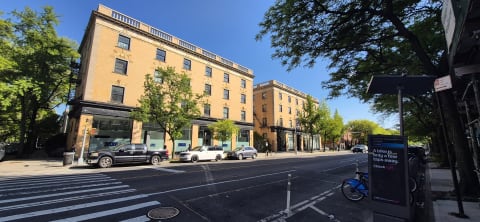
On a Sunday in Bay Ridge, a detached house drew nine offers in four days. Forty minutes away in Downtown Brooklyn, a condo sat on the market for two months. Both are part of the same NYC housing market. Increasingly, they behave like different economies.

One Bronx Landlord, $608,000, and a Pattern Worth Understanding
New York’s Tenant Protection Unit won a $608,000 settlement with a Bronx landlord across 11 buildings — a case that reveals a broader enforcement pattern.

New York Real Estate Is No Longer a Market. It’s an Information War
New York’s real estate market has fragmented — the old “pay the price, get the keys” is breaking. Why information now decides who wins, and how to use it.

5,200 NYC Households Crossed a Voucher Deadline May 1. Here's What Comes Next.
The federal Emergency Housing Voucher program is winding down. NYCHA has not promised every affected tenant will be placed. What a household holding one of these vouchers should do this week.

The $1,750 Rent Gap: Why Manhattan Renters Can't Afford to Move
A typical NYC renter pays $1,855 but faces $3,616 to move to a comparable unit — a $1,761 “rent gap” that locks tenants in place. What the data shows.