A Japanese investment firm bought your building. Or it might have, last week. Since the start of 2024, Japan-linked buyers have acquired at least $2.1 billion of New York City property — and an unusually large share of that money has been flowing not into trophy office towers but into ordinary multifamily walk-ups in Brooklyn, Queens, and the Bronx. The deal sizes are small. The implications for the people who actually live in those buildings are not.
The Real Deal reported on May 2 that Japanese buyers picked up 326 multifamily units across $233 million in deals over the past sixteen months, with brokers describing the dominant buyer profile as Japan-linked firms hunting for "relatively clean buildings free of regulatory headaches" in the $5 million to $15 million range. According to one broker quoted in the report, foreign multifamily activity in NYC right now is "probably 90-plus percent from Japan."
For a tenant in a Brooklyn walk-up that just sold, three things are worth understanding.
Why now, and why these specific buildings
The economics are unromantic. U.S. real estate yields more than Japanese real estate. Multifamily cap rates in New York hover around five percent. Japan's ten-year treasury yields roughly 2.4 percent. A Tokyo-based investor who can borrow cheaply at home and earn meaningfully more in New York has a structural arbitrage that did not exist a decade ago.
There is also a quirk in Japanese tax law worth knowing about. Older wood-frame buildings can be depreciated on an aggressive schedule — sometimes in as little as four years — which creates an effective tax shelter for the buyer. New York's stock of aging multifamily walk-ups, especially older buildings where the structure is worth more than the land underneath, fits this tax profile almost perfectly.
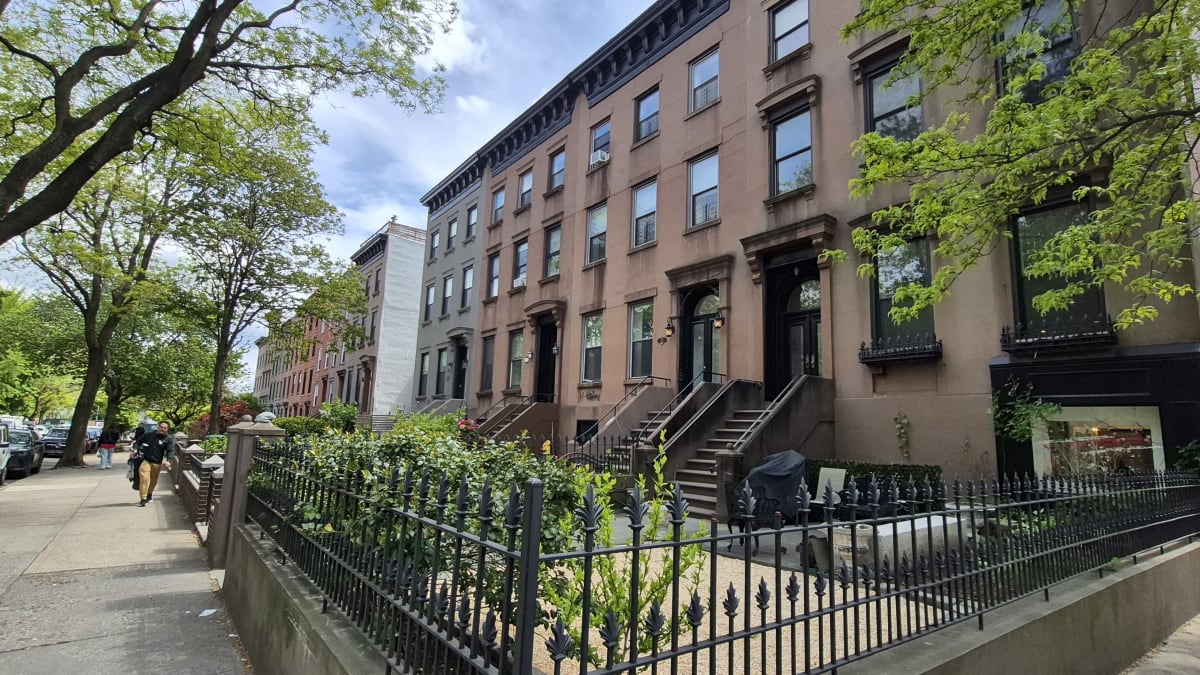
So the buildings being targeted are specific: older, smaller, walk-up, often in transit-accessible outer-borough neighborhoods, with a clean title and few obvious regulatory headaches. If you live in a five-story walk-up built before 1950 in Bushwick, Sunset Park, Astoria, or the South Bronx, your building is exactly the asset class.
What this changes for tenants
The honest answer is: it depends on the buyer's strategy, and tenants almost never know the strategy until it shows up in their lives. But three patterns are worth watching.
Faster turnover of management. When ownership changes, the property management company often changes too. The local super you have known for years may be replaced with a remote management firm communicating through an app. Maintenance response times can change. Lease renewal terms can become more standardized and less negotiable.
More aggressive vacancy capture. Foreign capital looking for yield optimization tends to be focused on bringing rents up to market on every vacant unit. Long-tenured tenants paying below-market rents are not displaced — that is illegal — but every move-out becomes an opportunity to reset a unit to the asking rent. In a building with high turnover, the rent roll can shift quickly.
Capital improvements with strings. New owners often invest in lobby renovations, new appliances, façade work. Some of that is genuinely good for tenants. Some of it is also legally chargeable as a Major Capital Improvement (MCI) increase that gets passed through to rent on regulated units, in legal increments that compound. Read every notice carefully.
None of these patterns is unique to Japanese capital. They are the patterns of any institutional ownership change, foreign or domestic. The relevance of the Japan angle is just that the velocity of these ownership changes in NYC walk-ups has accelerated, and tenants have a higher likelihood than they did three years ago of waking up to find their building has a new owner who is two LLCs deep and based in another country.
What is actually checkable
Tenants have more legal access to building ownership information than most people realize. Every NYC building has a publicly recorded chain of title showing every transfer, every owner, every mortgage. Every regulated unit has a rent history filed with state housing regulators. Every owner's broader portfolio — what other buildings they hold and how those buildings are performing — is traceable through the same public-record system that tenant lawyers and journalists use every day.
Three concrete things a tenant in a recently-sold building can check this week:
Who actually owns the new entity? The LLC named on the deed often points to a parent LLC, which sometimes points to a foreign holding company. Tracing the chain takes ten minutes. The result tells you whether you are now a tenant of an individual landlord, a US-based real estate fund, or a foreign capital allocator running a portfolio across multiple cities.
What is the rent history of your specific unit? State housing regulators maintain rent records for every regulated apartment going back decades. Requesting your own unit's history is free, takes about ten business days, and tells you whether the rent you are paying is the rent the law allows.
What other buildings does the new owner hold? Cross-referenced ownership records show the buyer's full NYC portfolio. A buyer with one quiet building and a buyer with sixty contested ones will both send the same lease renewal letter. The portfolio tells you which one you are dealing with.
The longer arc
The 1980s saw a similar wave of Japanese acquisition of US real estate, mostly trophy commercial. That wave receded with Japan's lost decade. Today's wave is different in scale and in target — smaller deals, more multifamily, more outer-borough walk-ups — but the underlying pattern is the same: capital looking for yield finds NYC residential because almost nowhere else in the developed world offers comparable returns at comparable scale and rule of law.
For tenants, the policy debate about foreign capital, rent regulation, and housing affordability will play out over years. The practical question is shorter. If your building changes hands this year, the information you need to understand what that means is already public. The question is whether you know to look.